
The Issue The achievement of human rights in society depends in some respects on the nature of the police existing in the country. Thus problems relating to the police must concern everyone concerned with human rights. It is important to obtain an accurate view of the actual problems facing policing; mere teaching of human rights […]
Lesson series 10: Caste: Discrimination on the Basis of Occupation and Descent
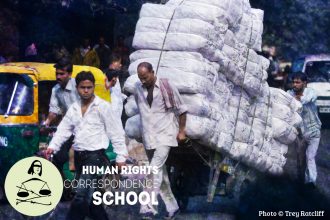
The Issue The World Conference Against Racism, Racial Discrimination, Xenophobia and related Intolerance (WCAR) will take place in South Africa from August 31 to September 7, 2001. For many Human rights NGOs, and especially for the 240 – 260 million caste-discriminated people in Asia (the majority of whom are 160 million “Dalits” in India and […]
Lesson series 09: An Introduction to the Situation of Women : A Workshop
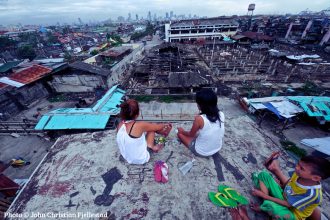
The Issue This lesson is a workshop model for an introduction to the situation of women. It leads participants to identify the human rights issues facing women in their own country, analyze these issues from different perspectives in order to understand the underlying causes, examine three international human rights treaties relevant to understanding and redressing […]
Lesson series 08: Child Soldiers
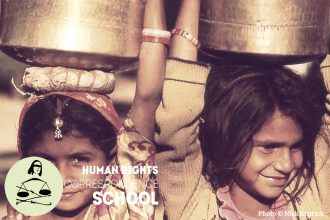
The Issue In recent armed conflict situations, the distinctions between combatants and civilians are disappearing with the increase of indiscriminate attacks against the civilian population in armed conflicts. Consequently, many children are killed, wounded, disabled, or torn apart from their families. According to UNICEF, more than 2 million children have been killed in armed conflicts […]
Lesson series 07: Torture and Other Cruel, Inhuman or Degrading Treatment or Punishment
The Issue The widespread prevalence of Torture in many Asian societies today is related to the breakdown of the systems of law and order in these societies. In this sense torture must be addressed as one of the central human rights issues, reflecting as it does, the general inability of the law enforcement agencies in […]
Lesson series 06: Human Rights Monitoring and Fact-Finding

The Issue Basic guidelines are required for the process of gathering information about and monitoring human rights abuses. The most important aspect of a fact-finding process is the analysis of the information, and ultimately, utilizing the information to advocate for action to stop the violations. In addition to the technical skills and resources needed to […]
Lesson series 05: Due Process Rights (ref. Art. 14 of ICCPR)

The Issue This lesson examines creative ways human rights activists can promote and monitor government spending on necessary legal reforms.
Lesson series 04: Introduction to the International Covenant on Economic, Social and Cultural Rights (ICESCR)

The Issue This is a brief historical and philosophical background of the origins of the ICESCR, and further discusses two basic elements of economic and social rights–the right to an adequate standard of living and the rights to work and fair conditions of work. It is important to explore the scope of these rights and […]
Lesson series 03: Non-Discrimination and Right to Life

(A special lesson for religious groups) The Issue The single incident which opens the way to discussion of a number of human rights issues, as laid out in this lesson, is the (controversial) act of suicide of the Pakistani Catholic Bishop John Joseph on May 6 1998. Rev. Dr. John Joseph, 66, was a Catholic […]
Lesson series 02: Human Rights and Women Domestic Workers
The Issue The basic issue concerning women domestic workers is that women in the less developed countries in Asia, many with full educational qualifications and even professional training cannot find jobs in their own professions, neither in their own countries, where unemployment is high, nor abroad, due to restrictions on labour migration in possible receiving […]